
Gaggia Classic Pro No Pressure or Weak Shots? 11 Causes and How to Fix Each
 By Marco R. · Lead repair technician Updated June 17, 2026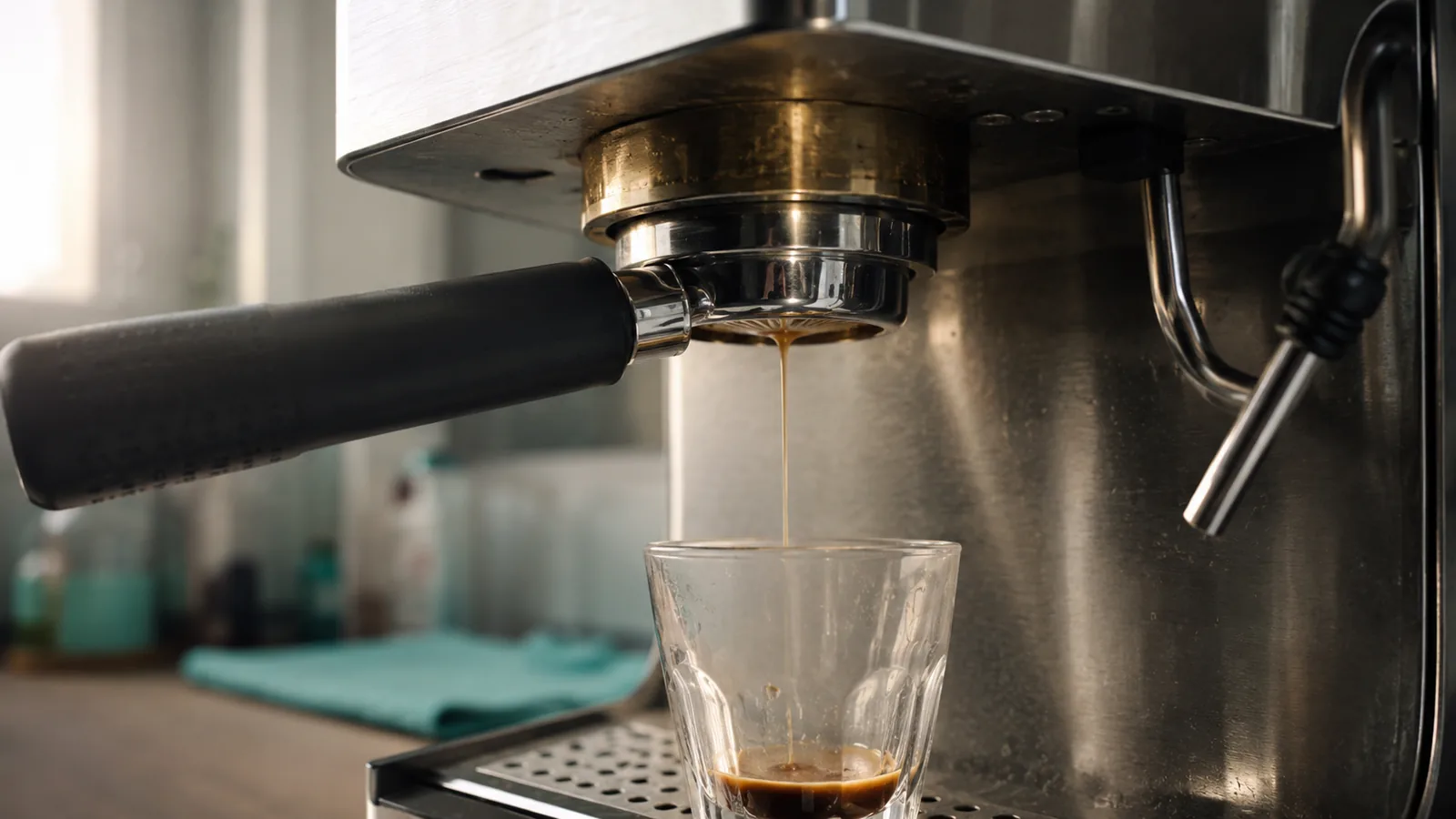
The Gaggia Classic Pro is a wonderfully honest machine — no shot timer, no pressure gauge, just a brass group, a vibration pump and whatever you put in the basket. That bareness is exactly why “no pressure” or “weak shots” almost always comes down to the puck or a worn seal, not some hidden electronic fault. The flip side: the machine won’t hold your hand, so you have to learn to read it.
I’ve rebuilt and dialled in a lot of these, and the same handful of causes come up again and again. We’ll start by reading what your machine is actually telling you, then go cause by cause — most likely first — with how to confirm each one and exactly how to fix it. Almost everything here costs a few dollars or nothing at all.
What “no pressure” actually means on a Classic Pro
Because there’s no gauge, “pressure” is something you read from the shot itself:
- Fast, pale, splattery pour, little or no crema → too little resistance. Water is finding an easy path. This is what most people mean by “no pressure.” (Causes 1–7.)
- Pump strains, almost nothing comes out (choking) → too much resistance. The grind is too fine or the dose too high. (Cause 8.)
- Pump buzzes loudly and no water moves at all → that’s not really a pressure problem, it’s an airlock — see the priming guide.
A healthy double pulls in about 25–30 seconds for ~2 oz (60 ml) and pours like warm honey. Time one shot and watch the pour; that single observation tells you which half of this guide you’re in.
Quick diagnosis
| What you see | Most likely cause | Jump to |
|---|---|---|
| Gushes in under 15 s, pale, thin | Grind too coarse / under-dosed | Cause 1 |
| Was fine, slowly got weaker | Worn gasket / clogged screen | Causes 6–7 |
| Crema only with the pressurised basket | Grind/basket mismatch | Cause 2 |
| Sprays sideways from the portafilter | Worn group gasket | Cause 6 |
| Chokes, nothing comes out | Grind too fine / over-dosed | Cause 8 |
| Everything’s right, still flat | OPV set high / pump | Causes 9–10 |
Cause 1 — Grind too coarse or dose too low (the usual culprit)
What it looks like: The shot gushes out in well under 15 seconds, blonde and watery, with thin crema that vanishes.
Why it happens: Espresso is all about resistance. Coarse grounds, or too few of them, leave gaps for water to race through instead of being forced evenly through the coffee bed.
How to confirm: Time a double. If you hit 2 oz in 10–12 seconds, you’re too coarse or under-dosed — guaranteed.
The fix:
- Grind finer, one step at a time.
- Dose to properly fill the basket (for most single-wall double baskets that’s roughly 16–18 g — level and even).
- Tamp level with firm, consistent pressure.
- Re-time and adjust grind one step per shot until you land in the 25–30 second window.
Cause 2 — Wrong basket for your grind
Why it happens: The Classic Pro ships with pressurised (dual-wall) baskets that create their own back-pressure through a tiny hole, plus you can fit single-wall (commercial) baskets. A coarse grind in a single-wall basket gives a weak, fast shot; people then blame the machine.
How to confirm: Flip the basket. A single pinhole underneath = pressurised (forgiving). An open mesh of holes = single-wall (demanding).
The fix: If you’re still dialling in, use the pressurised basket — it builds crema even with average coffee. Move to single-wall only once your grinder is consistent and you’ve got a fine, fresh grind to feed it.
Cause 3 — Stale or wrong beans
Why it happens: Fresh beans (roasted within ~2–4 weeks) hold the CO₂ that builds crema and resistance. Beans that have been open for months, or pre-ground coffee, simply can’t build a proper shot — that’s physics, not your technique.
How to confirm: Watch the bloom during pre-infusion. Fresh coffee swells; stale grounds just sit there flat.
The fix: Use whole beans, recently roasted, ground right before you pull. If you’ve been running old pre-ground in a single-wall basket, that combination alone explains a flat shot.
Cause 4 — Channeling (uneven puck)
Why it happens: If the grounds aren’t level before tamping, water carves a channel straight through the path of least resistance and never pressurises the bed — so even a perfect grind pours weak and squirty.
How to confirm: The shot sprays unevenly, often from one side, or “jets” early.
The fix: Distribute the grounds level (a finger swipe or a distribution tool), then tamp dead flat. Don’t tap the portafilter on the counter after tamping — that cracks the puck and causes the channeling you’re trying to avoid.
Cause 5 — Cold group / not warmed up
Why it happens: The Classic Pro’s chunky brass group is a heat sink. Pull a shot on a cold machine and the temperature (and your perception of body and crema) suffers.
How to confirm: First shot of the day is weak, later ones improve.
The fix: Give it a proper warm-up — 15–20 minutes powered on with the portafilter locked in, and flush some water through the group just before brewing. Many owners leave the portafilter in to keep it hot.
Cause 6 — Worn group gasket
Why it happens: The rubber group gasket hardens and shrinks with heat and age. Once it loses its squish, the portafilter no longer seals and pressurised water escapes around the puck instead of through it.
How to confirm: Does the portafilter now lock well past the centre point, where it used to stop near 6 o’clock? Do you see water spraying from the sides during a shot? That’s a worn gasket.
The fix: Replace the group gasket — an inexpensive part and a ~10-minute job: remove the shower screen and its holder, pry out the old gasket, press the new one in (lip facing down). This is one of the most common Classic Pro fixes and it restores the seal instantly.
Cause 7 — Clogged shower screen or basket holes
Why it happens: Coffee oils and fines bake onto the shower screen and into the tiny basket holes over months, throttling and unevening the flow until shots taste bitter and pour erratically.
How to confirm: Run a fingernail across the shower screen — gritty or oily means overdue. Hold the basket to the light; blocked holes don’t pass light evenly.
The fix: Remove and soak (or replace) the shower screen, soak the basket in a cleaning solution and scrub the holes with a soft brush, and backflush the group with a blind basket and detergent. A clean group plus a fresh gasket brings a tired machine right back.
Cause 8 — Choking: too fine or over-dosed
Why it happens: The opposite problem. Too fine a grind or an overfilled basket packs the bed so tightly that water can’t get through — the pump strains and the OPV dumps the excess back to the tank, so little or nothing reaches the cup.
How to confirm: Pump runs hard, a few dark drops at most, then nothing.
The fix: Go a couple of steps coarser and reduce the dose slightly. Make sure there’s headroom between the puck and the shower screen (do the “coin test” — a coin pressed on the puck should leave a light imprint on the screen, not be crushed in).
Cause 9 — OPV set high (the 9-bar question)
Why it happens: From the factory the Classic Pro’s over-pressure valve (OPV) is set around 12–15 bar. Higher pressure increases channeling and can make shots harsh — and it can mask or exaggerate other issues.
The fix: Many enthusiasts adjust the OPV down to ~9 bar. It’s a well-documented internal adjustment (turning the OPV spring/screw) that gives gentler, more even extraction. It won’t fix a coarse grind or a worn gasket — do those first — but it’s a worthwhile tune-up once the basics are sorted. If you’re not comfortable inside the machine, a tech can do it in minutes.
Cause 10 — Weak pump (rare — check last)
Why it happens: After many years, the ULKA vibration pump can weaken.
How to confirm: Only suspect this once grind, basket, gasket, screen, scale and OPV are all ruled out, and the machine still can’t build pressure with a fine grind and a good puck. A failing pump pushes little water everywhere, including from the steam wand.
The fix: The vibration pump is an inexpensive, replaceable part, and the Classic Pro is designed to be opened and serviced. A confident DIYer or any repair shop can swap it.
Cause 11 — Heavy scale
Why it happens: Limescale narrows the boiler and pipework, reducing flow and pressure (and it’ll eventually kill the machine).
The fix: Descale on schedule with a proper descaler. See our descaling guide. In hard-water areas this is non-negotiable maintenance, and it often restores flow and pressure together.
Common mistakes that make it worse
- Grinding coarser to “let more through” when the shot is already weak — that’s backwards; weak shots need a finer grind.
- Tapping the portafilter after tamping, cracking the puck and causing channeling.
- Using stale pre-ground in a single-wall basket and blaming the pump.
- Chasing the OPV mod before basics — it won’t rescue a bad puck.
- Never backflushing, so the group slowly chokes and you assume the machine is dying.
Repair or replace?
This is firmly repair territory, and a cheap one. Grind and dose cost nothing; a gasket and shower screen are a few dollars; even a pump is inexpensive. The Classic Pro is famous for running for decades precisely because every part is serviceable and parts are everywhere. There is essentially no “no pressure” scenario that justifies replacing the machine — if it’s still under warranty, contact Gaggia before opening it.
Stop it happening again
- Dial grind and dose for a steady 25–30 second double.
- Backflush weekly and replace the group gasket every 12–18 months.
- Keep fresh beans, distribute and tamp level.
- Descale on schedule for your water hardness.
- Warm the machine up fully before the first shot.
Free: the Espresso Fix-It Cheat Sheet (PDF)
The 1-page printable that takes any fault to its cause, plus the maintenance schedule that prevents most breakdowns. Straight to your inbox.
By subscribing you agree to receive emails from BaristaFix and to our Privacy Policy. No spam — unsubscribe anytime.Frequently asked questions
What pressure should a Gaggia Classic Pro be?
Why is my Gaggia Classic Pro not building pressure?
Why did my Gaggia shots get weak over time?
Should I do the 9 bar OPV mod on my Classic Pro?
Pressurised vs single-wall basket — which should I use?
My Gaggia espresso chokes and nothing comes out — is that no pressure?
How long should a Gaggia Classic Pro shot take?
Marco spent twelve years servicing espresso machines — first behind the bench at a specialty café group, then running his own repair workshop. He has stripped down, fixed and reassembled everything from a battered Gaggia Classic to high-end Swiss automatics. He writes the fixes here only after reproducing the fault on a real machine, and he'll always tell you when a repair isn't worth the money.