
Cleaning & Backflushing Your Espresso Machine: A Complete Guide
 By Marco R. · Lead repair technician Updated June 18, 2026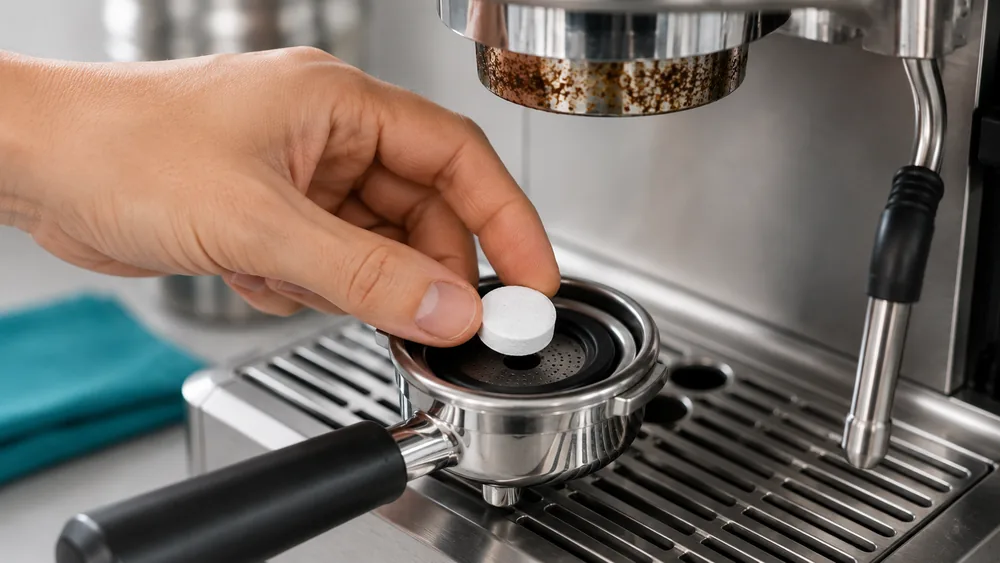
Descaling gets the headlines, but cleaning is what keeps your coffee actually tasting good. Every shot leaves behind oils and fine particles that bake onto the group head, clog the shower screen and basket holes, and gum up brew units. Within weeks those oils go rancid and turn even a well-dialled shot bitter and erratic. The fix is a simple routine — and unlike scale, the results are immediate: clean the coffee path and the next shot tastes brighter.
This is the brand-agnostic guide to cleaning and backflushing. For exact steps, find your model on the machines page.
Cleaning vs descaling (don’t confuse them)
They sound similar and people mix them up constantly, but they target different gunk:
- Cleaning removes coffee oils and grounds from the parts coffee touches.
- Descaling removes mineral limescale from inside the water system.
You need both, on different schedules. Cleaning fixes taste (bitter, oily, muddy); descaling fixes performance (weak flow, cool coffee). More on the distinction in our descaling vs cleaning guide.
The everyday habits
These take seconds and prevent almost all build-up:
- After every milk drink: purge a burst of steam and wipe the wand before milk dries (dried milk is the top cause of blocked wands).
- After every shot: knock out the puck and rinse the portafilter and basket.
- End of session: flush a little water through the group to clear loose grounds.
The weekly clean
| Part | What to do |
|---|---|
| Baskets & portafilter | Soak in hot water with espresso-machine cleaner, scrub holes with a soft brush |
| Shower screen | Wipe or remove and soak; check it’s not gritty/oily |
| Steam wand | Soak the tip, clear holes with a pin |
| Drip tray & grounds | Empty, wash, dry |
| Bean-to-cup brew unit | Remove (if removable) and rinse under the tap; no detergent |
Backflushing (portafilter machines with a three-way valve)
Backflushing forces water backwards through the group to flush oils out of places a rinse can’t reach. It applies to machines with a three-way solenoid (e.g., the Gaggia Classic Pro):
- Put the blind (no-hole) basket in the portafilter.
- Add a small measure of espresso-machine backflush detergent.
- Lock in and run the pump in short bursts (a few seconds on, off) several times.
- Remove the detergent and repeat with plain water several times to rinse.
Bean-to-cup machines
Automatics keep their brew group hidden, so cleaning looks different:
- Removable brew units (De’Longhi, Philips): pull out weekly and rinse under the tap with no detergent, let dry, and occasionally apply food-grade grease to the seals.
- Sealed brew units (Jura): never removed — run the cleaning-tablet program when prompted, which flushes the unit automatically.
- Milk systems: rinse daily; deep-clean with the milk-system cleaner weekly. Dishwasher-safe carafes (LatteGo) can go on the top rack.
Common mistakes
- Confusing cleaning with descaling and only doing one.
- Backflushing a machine that shouldn’t be backflushed.
- Using abrasive pads or harsh detergents that scratch screens and harm seals.
- Letting milk dry in the wand or carafe.
- Detergent inside a Jura brew unit — water only there.
Keep it clean for good
- Build the after-every-use habits — they’re 90% of the job.
- Do the weekly soak and wipe, and backflush on schedule if your machine supports it.
- Keep cleaning tablets and a soft brush on hand so it’s never a chore.
- Pair cleaning with regular descaling — together they’re the whole maintenance story, and they prevent most of the problems on this site.
Free: the Espresso Fix-It Cheat Sheet (PDF)
The 1-page printable that takes any fault to its cause, plus the maintenance schedule that prevents most breakdowns. Straight to your inbox.
By subscribing you agree to receive emails from BaristaFix and to our Privacy Policy. No spam — unsubscribe anytime.Frequently asked questions
What's the difference between cleaning and descaling?
How do I backflush an espresso machine?
How often should I clean my espresso machine?
Why does my espresso taste bitter even though pressure is fine?
Can I clean espresso machine parts in the dishwasher?
What should I never use to clean my machine?
Marco spent twelve years servicing espresso machines — first behind the bench at a specialty café group, then running his own repair workshop. He has stripped down, fixed and reassembled everything from a battered Gaggia Classic to high-end Swiss automatics. He writes the fixes here only after reproducing the fault on a real machine, and he'll always tell you when a repair isn't worth the money.