
How to Descale an Espresso Machine the Right Way (Any Machine)
 By Marco R. · Lead repair technician Updated June 18, 2026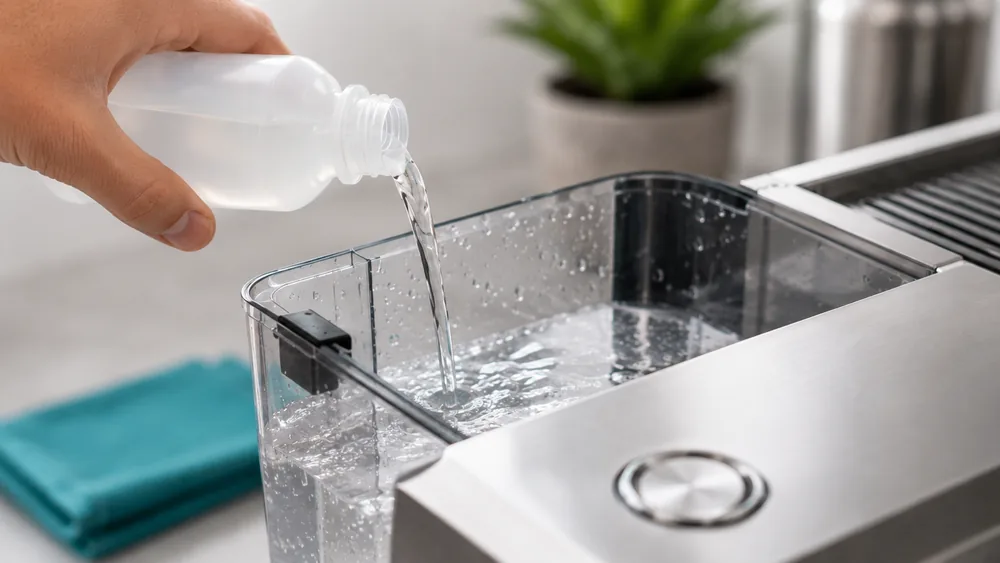
If you only ever do one maintenance job on your espresso machine, make it descaling. Limescale — the chalky mineral deposit that hard water leaves behind — is the single most common reason home machines die. It builds up silently inside the boiler and pipes, choking flow, sapping pressure, cooling your coffee, and eventually blocking or burning out the heating system. The good news: descaling is simple, cheap, and on most machines takes about half an hour, most of it hands-off.
This is the brand-agnostic how-and-why. For the exact button presses, find your model on our machines page — but the principles below apply to every espresso machine, bean-to-cup automatic and pod brewer.
What scale is and why it matters
Every time your machine heats water, minerals (mainly calcium and magnesium) drop out and stick to hot metal surfaces. Over weeks and months they form a hard, insulating crust on the heating element and a narrowing fur inside the pipes. That does three bad things:
- Cuts heat transfer, so coffee gets cooler and the machine takes longer to warm up.
- Narrows the waterways, dropping flow and pressure — your shots get weaker and slower.
- Eventually blocks or overheats the system, which is what actually kills many machines.
Descaler is a mild acid (or chelating agent) that dissolves that crust and flushes it out before it does permanent harm.
How often to descale
| Water hardness | Rough schedule |
|---|---|
| Soft / filtered | Every 2–3 months |
| Medium | Every 1–2 months |
| Hard | Monthly |
| Very hard, no filter | Every few weeks |
Most bean-to-cup automatics track usage and prompt you — don’t ignore the alarm. Pump and pod machines usually rely on you to keep a schedule. When in doubt, descale more often rather than less; you can’t really over-descale if you rinse properly.
What to use (and what to avoid)
- Best: a purpose-made espresso-machine descaler (liquid or tablets). It’s formulated to remove scale without attacking seals, and it rinses cleanly.
- Acceptable DIY: a citric acid solution, which is gentler than vinegar.
- Avoid in most machines: white vinegar. It can degrade seals, is hard to rinse, leaves a lingering taste, and many makers warn against it (it can void the warranty).
The general descaling steps
The details vary by machine, but the shape is always the same:
- Empty and prepare. Empty the drip tray and grounds, and remove any water filter (descaler can ruin it).
- Mix the solution. Add descaler to the water tank at the dose on the pack, and fill with fresh water.
- Start the descale cycle. On automatics, select the descale program. On pump/pod machines, follow the model’s procedure (often holding a button to enter descale mode).
- Run it through every outlet. Make sure solution passes through the coffee path and the steam/hot-water path — scale builds up in both. Place a large container underneath.
- Let it work. The cycle pauses and runs in stages; don’t interrupt it.
- Rinse thoroughly. Refit nothing chemical — run two or three full tanks of fresh water through all outlets until there’s no descaler smell or taste.
- Refit the filter (a fresh one if it was due) and pull a throwaway shot before drinking.
Machine-type notes
- Pump / portafilter machines (Gaggia Classic Pro, Breville Bambino, De’Longhi Dedica): run descaler through the group and the steam wand. Remove the portafilter for the cycle. These benefit from descaling and backflushing/cleaning.
- Bean-to-cup automatics (De’Longhi Magnifica, Philips, Jura): use the on-screen descale program. With a recognised filter (CLEARYL, AquaClean) fitted, some skip descaling entirely until the filter is due.
- Pod machines (Nespresso): a quick descale cycle through the head; capsules out, container under the spout.
Common mistakes
- Not rinsing enough, so the next coffees taste sour or chemical.
- Leaving the filter in during the cycle, ruining it.
- Using vinegar in a machine that shouldn’t have it.
- Ignoring the descale light for weeks because the machine “still works.”
- Descaling but never cleaning (or vice versa) — they’re different jobs.
Stop scale coming back
- Use filtered or bottled low-mineral water, not hard tap water.
- Fit and replace your machine’s water filter on schedule.
- Empty the tank if the machine sits unused for days.
- Keep to your descale schedule for your water hardness — prevention is far easier than reviving a scaled-up machine.
Once descaling is a habit, most of the scary-sounding faults on this site — weak pressure, cool coffee, no flow — simply stop happening. Pair it with regular cleaning and backflushing, and understand how the two differ, and your machine will outlast its warranty by years.
Free: the Espresso Fix-It Cheat Sheet (PDF)
The 1-page printable that takes any fault to its cause, plus the maintenance schedule that prevents most breakdowns. Straight to your inbox.
By subscribing you agree to receive emails from BaristaFix and to our Privacy Policy. No spam — unsubscribe anytime.Frequently asked questions
How often should I descale my espresso machine?
Can I use vinegar to descale my espresso machine?
What happens if I never descale?
Do I still need to descale if I use a water filter?
What's the difference between descaling and cleaning?
How do I rinse descaler out properly?
Marco spent twelve years servicing espresso machines — first behind the bench at a specialty café group, then running his own repair workshop. He has stripped down, fixed and reassembled everything from a battered Gaggia Classic to high-end Swiss automatics. He writes the fixes here only after reproducing the fault on a real machine, and he'll always tell you when a repair isn't worth the money.