
Breville Barista Express Steam Wand Not Working? Fix Weak or No Steam
 By Marco R. · Lead repair technician Updated June 17, 2026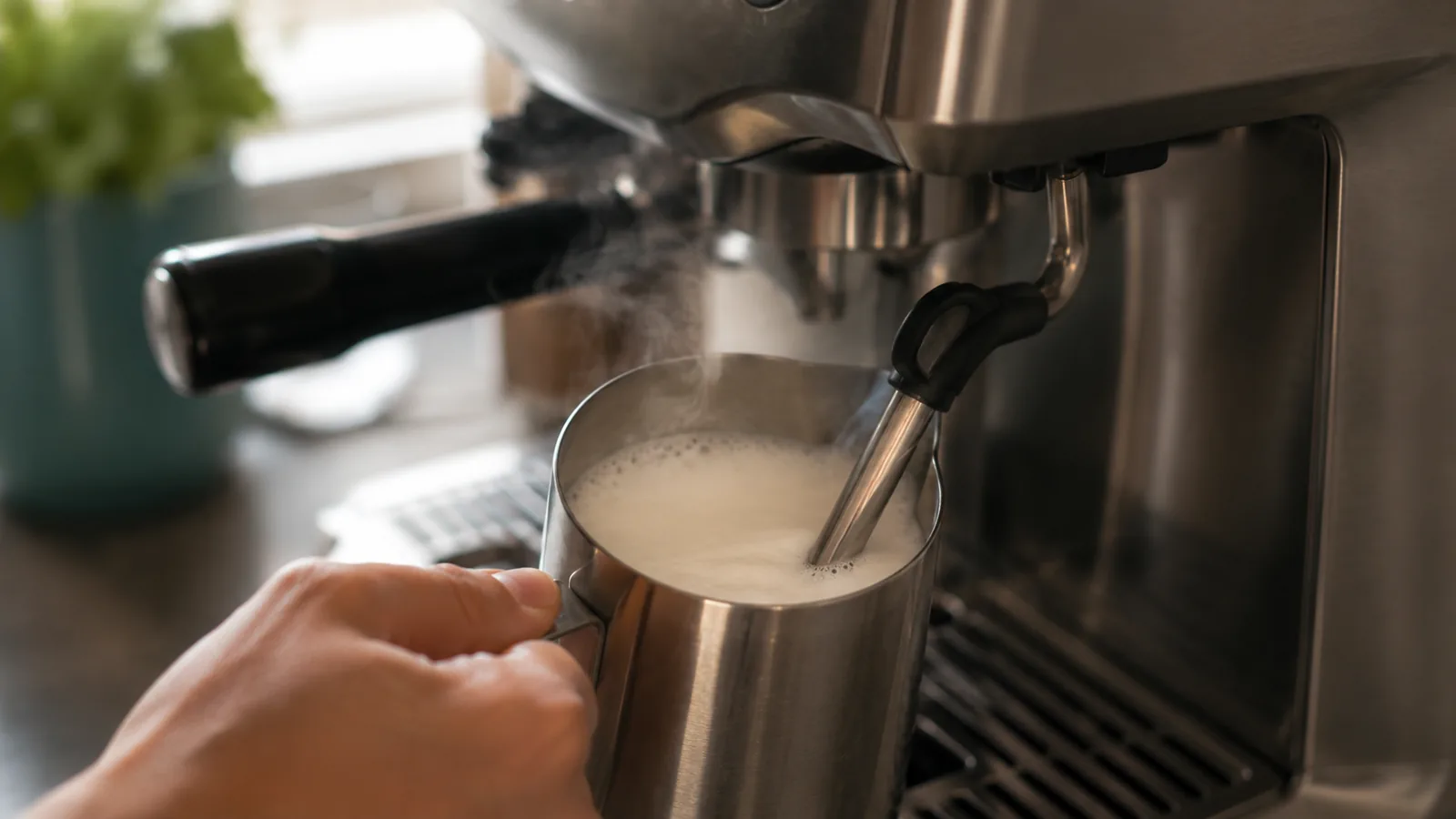
A steam wand that’s gone quiet is one of the most common — and most fixable — Barista Express complaints. The culprit is nearly always the same: a steam tip clogged with dried milk. Milk gets drawn back into the tip as it cools, bakes on, and slowly strangles the steam. Let’s clear it and get proper microfoam back.
First, rule out the two non-faults
Before you decide the wand is broken, check these — they catch a lot of people:
- Is it at steam temperature? After pulling a shot, turning to steam takes a moment on the single-thermocoil Barista Express. Wait for the steam light to settle before expecting full pressure.
- Did you purge it? A second of water/condensation at the start is normal. Always purge briefly, then froth.
If steam is genuinely weak or absent after that, work through the causes below.
Cause 1 — Blocked steam tip (the usual culprit)
Why it happens: Milk residue dries inside the tip’s small holes. Even one or two blocked holes drops the steam noticeably; all of them blocked and you get a wheeze and a dribble.
The fix:
- Switch off and let the wand cool, or work carefully — it’s hot.
- Unscrew the steam tip from the end of the wand (it twists off).
- Soak it in hot water with a little cleaning powder for 15–30 minutes.
- Clear each hole with the pin tool that came with the machine (or a fine needle).
- Rinse, refit, and test on water, then milk.
Cause 2 — Not reaching steam temperature
Why it happens: The Barista Express uses one heating system (a thermocoil) for both brewing and steaming, so it switches modes and needs a moment to ramp up for steam. If you rush it, you get weak steam.
The fix: Select steam, wait for the steam light to indicate ready, then froth. If it never seems to reach steam temperature and also struggles to brew hot, that points to scale (Cause 3) or a heating issue.
Cause 3 — Scale in the steam circuit
Why it happens: Limescale builds up in the same passages steam travels through, throttling pressure over time. If your steam has slowly weakened over months in a hard-water area, this is likely.
The fix: Run a full descale with a proper descaler. This clears the brew and steam paths together. Fit a fresh water filter afterward to slow it returning. See our descaling guide.
Cause 4 — Wand O-ring or swivel leaking
Why it happens: The wand pivots on a seal. If that O-ring perishes, steam escapes at the joint instead of the tip, so the tip feels weak even though the machine is making plenty of steam.
The fix: Check for steam escaping where the wand meets the body. If it is, the swivel O-ring needs replacing — an inexpensive part. It’s a fiddlier job than clearing the tip, so it’s worth confirming the tip is clear first.
Bonus: strong steam but no microfoam
If steam pressure is good but your milk comes out airy and bubbly rather than glossy, that’s technique, not a fault. Start with the tip just below the surface to “stretch” the milk (a gentle hiss), then drop the jug so the tip submerges and spins the milk into a whirlpool. A clean tip plus that two-stage motion is what makes silky microfoam.
Repair or replace?
Every cause here is a cheap repair — a clean, a descale, or an O-ring. The steam system doesn’t justify replacing the machine. Clear the tip first; it solves this for the vast majority of owners.
Stop it happening again
- Purge and wipe the wand after every use, every time.
- Soak the tip occasionally even when it seems fine.
- Descale on schedule and keep a filter in the tank.
Free: the Espresso Fix-It Cheat Sheet (PDF)
The 1-page printable that takes any fault to its cause, plus the maintenance schedule that prevents most breakdowns. Straight to your inbox.
By subscribing you agree to receive emails from BaristaFix and to our Privacy Policy. No spam — unsubscribe anytime.Frequently asked questions
Why is there no steam from my Barista Express wand?
Why is my steam so weak it won't froth milk?
Steam comes out but milk won't make microfoam — what am I doing wrong?
Water sprays from the wand instead of steam — is that bad?
Marco spent twelve years servicing espresso machines — first behind the bench at a specialty café group, then running his own repair workshop. He has stripped down, fixed and reassembled everything from a battered Gaggia Classic to high-end Swiss automatics. He writes the fixes here only after reproducing the fault on a real machine, and he'll always tell you when a repair isn't worth the money.