
Gaggia Classic Pro Steam Wand Not Working? Fix Weak, No, or Spitting Steam
 By Marco R. · Lead repair technician Updated June 17, 2026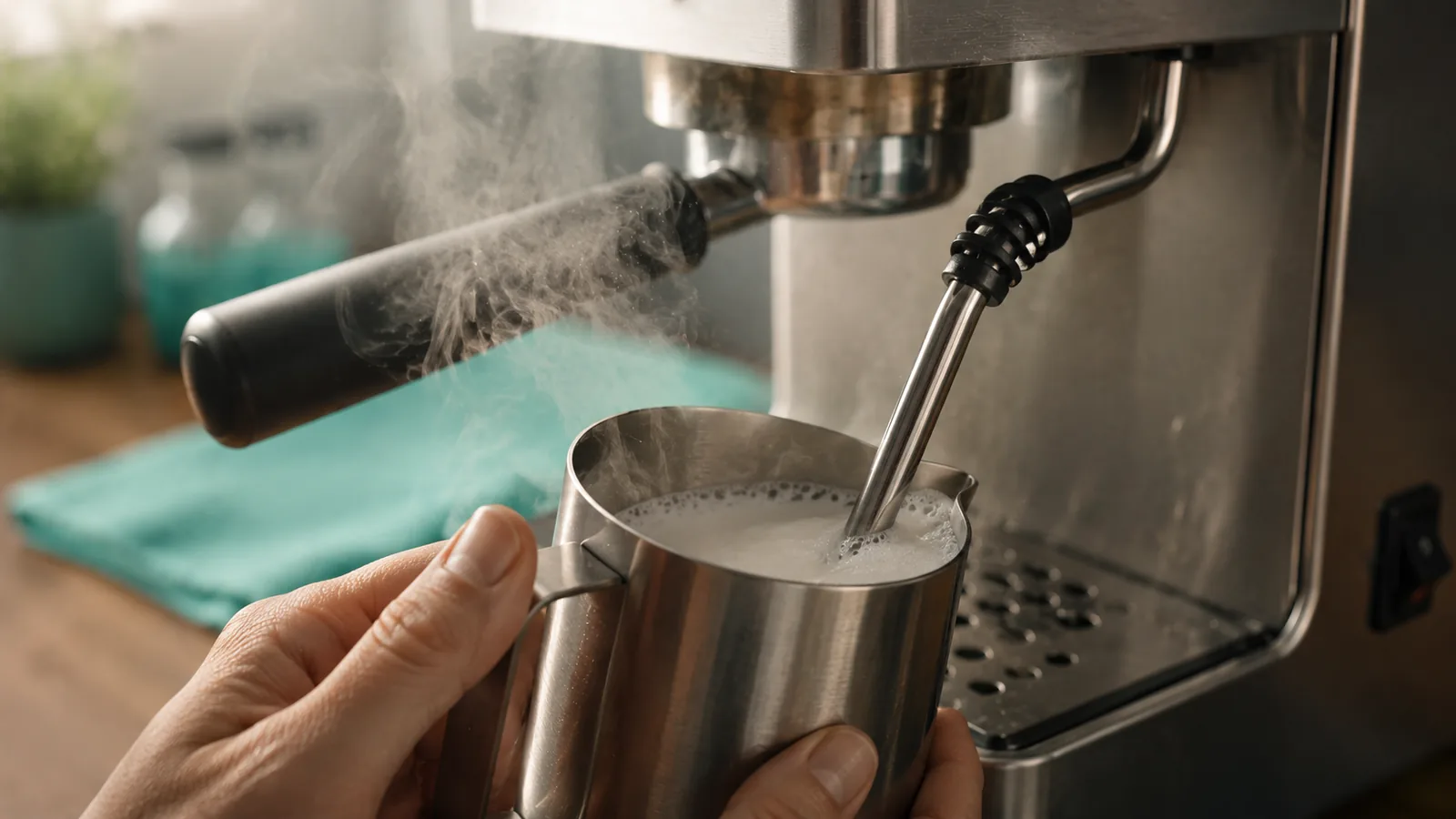
The Classic Pro makes genuinely good steam for milk — when the boiler is at steam temperature and the tip is clear. Almost every “no steam” or “weak steam” complaint comes down to one of those two things, and both are quick, cheap fixes. Let’s rule out the easy stuff first, then work through the rest, including the steam valve and O-rings that occasionally need attention.
First, rule out the two non-faults
Before deciding the wand is broken, check these — they catch most people:
- Did you switch to steam and wait for the light? Press the dedicated steam switch after the machine is at brew temperature. The single boiler has to climb to a higher steam temperature, and the steam light tells you when it’s ready. Open the knob too early and you get water, not steam.
- Did you purge first? A second of water/condensation at the start is normal. Purge it into a cloth, then froth.
If steam is still weak or absent after that, work through the causes.
Cause 1 — Blocked steam tip (the usual culprit)
What it looks like: A wheeze and a dribble instead of a strong jet, or steam from only some holes.
Why it happens: As milk cools after frothing, it gets drawn back into the tip and bakes onto the holes. Even one or two blocked holes drop output noticeably.
How to confirm: Look at the tip end — milk crust in the holes, or an uneven, lopsided steam pattern.
The fix:
- Let the wand cool, then unscrew the steam tip from the end of the wand.
- Soak it in hot water (a little cleaning detergent helps) for 15–30 minutes.
- Clear each hole with a pin or fine needle.
- Rinse, refit, and test on a jug of water, then milk.
Cause 2 — Not at steam temperature
Why it happens: The Classic Pro is a single-boiler machine, so it switches between brew and steam temperatures. Frothing before the steam light is ready gives weak, wet, spitting steam.
How to confirm: Steam is weak and watery on the first try but you opened the knob quickly.
The fix: Press the steam switch, wait for the steam light, purge, then froth. If it never builds strong steam and also struggles to brew hot, suspect scale (Cause 3).
Cause 3 — Scale in the boiler and steam path
Why it happens: Limescale coats the boiler and throttles the steam passages, so pressure weakens over months — especially in hard-water areas.
How to confirm: Steam has slowly got weaker over time; you’re overdue a descale.
The fix: Descale with a quality descaler following a Classic Pro routine, then flush clean water through the wand and group. See our descaling guide. This restores steam pressure and brew flow together.
Cause 4 — Blocked wand (above the tip)
Why it happens: Occasionally milk or scale blocks the wand tube itself, not just the tip.
How to confirm: Tip is clear and clean but steam is still weak.
The fix: With the tip off and the machine at steam temp, carefully open the knob to blow steam through the bare wand into a cloth — this clears the tube. If it’s scaled internally, a descale (Cause 3) plus a soak sorts it.
Cause 5 — Steam valve packing or wand O-rings
Why it happens: The steam knob valve has internal packing/seals, and the wand pivots on O-rings. As these wear, steam escapes internally or at the wand base instead of out of the tip — so the tip feels weak even though the boiler is making plenty of steam.
How to confirm: You can feel or hear steam escaping around the knob or where the wand meets the body, not from the tip.
The fix: Replace the steam valve seals/packing or the wand O-rings — inexpensive parts and a well-documented Classic Pro repair. Confirm the tip and wand are clear first so you don’t replace seals unnecessarily.
Optional upgrade: the Rancilio Silvia wand
A genuinely popular Classic Pro mod is swapping the stock wand for a Rancilio Silvia steam wand, which articulates better and has a nicer tip for latte art. It’s a straightforward bolt-on. Worth knowing about — but a clean stock wand at proper steam temperature already textures milk well, so treat it as an upgrade, not a fix.
Bonus: strong steam but bad foam
If steam pressure is good but the milk comes out bubbly rather than glossy, that’s technique, not a fault. Start with the tip just under the surface to introduce a little air (a gentle hiss), then submerge slightly to spin the milk into a whirlpool. Whole milk is the most forgiving; very cold milk gives you more time.
Common mistakes that make it worse
- Opening the steam knob before the steam light and concluding the wand is dead.
- Never purging or wiping after frothing, so the tip bakes shut.
- Soaking the whole wand in milk cleaner but never clearing the tip holes with a pin.
- Replacing valve seals before checking the tip — start with the cheapest, most likely fix.
Repair or replace?
Every cause here is cheap: a clean, a descale, a set of seals, or an optional wand upgrade. The Classic Pro’s steam system is simple and fully serviceable — it’s never a reason to replace the machine. Under warranty? Contact Gaggia first.
Stop it happening again
- Purge and wipe the wand after every milk drink.
- Always wait for the steam light before frothing.
- Descale on schedule for strong, dry steam.
- Keep the tip holes clear with an occasional soak even when it seems fine.
Free: the Espresso Fix-It Cheat Sheet (PDF)
The 1-page printable that takes any fault to its cause, plus the maintenance schedule that prevents most breakdowns. Straight to your inbox.
By subscribing you agree to receive emails from BaristaFix and to our Privacy Policy. No spam — unsubscribe anytime.Frequently asked questions
Why is there no steam from my Gaggia Classic Pro?
Why is my Gaggia steam weak and watery?
How do I get the Classic Pro to steam temperature?
Water spits from the wand instead of steam — is that bad?
Why does steam escape around the knob, not the tip?
Can I upgrade the Gaggia Classic Pro steam wand?
Marco spent twelve years servicing espresso machines — first behind the bench at a specialty café group, then running his own repair workshop. He has stripped down, fixed and reassembled everything from a battered Gaggia Classic to high-end Swiss automatics. He writes the fixes here only after reproducing the fault on a real machine, and he'll always tell you when a repair isn't worth the money.