
Gaggia Classic Pro Won't Turn On? Power Fixes and the Thermal Fuse (Step by Step)
 By Marco R. · Lead repair technician Updated June 17, 2026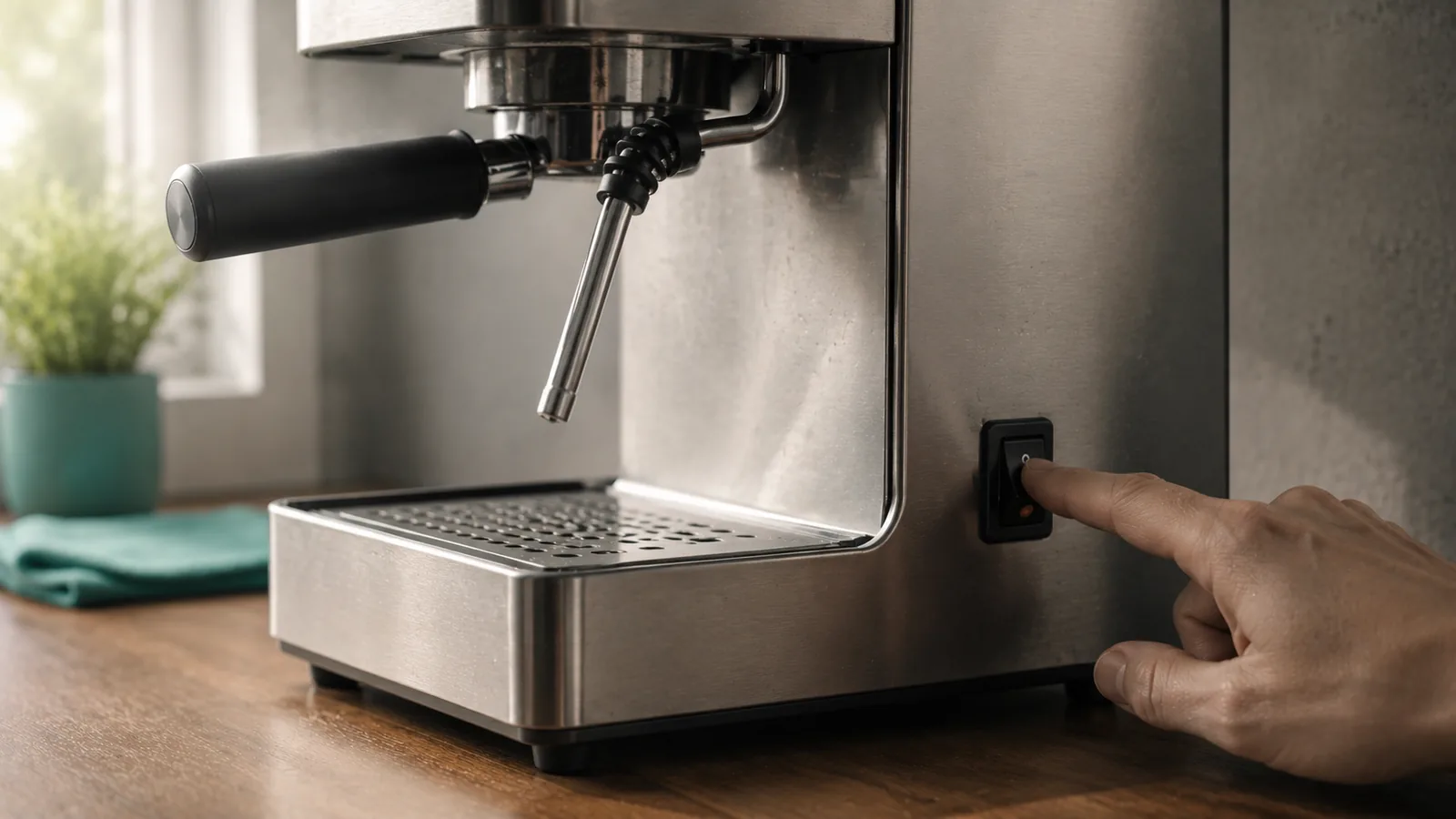
A dead Classic Pro is alarming, but it’s usually one of two things: a power problem at the wall, or a blown thermal fuse inside. The good news is that the Gaggia is one of the most repairable espresso machines ever made, and its most common “dead machine” cause — the thermal fuse — is a cheap, well-documented fix. Let’s rule out the free checks first, then tackle the fuse properly.
Cause 1 — The outlet, cord and switch
Why it happens: Dead sockets, tripped breakers, loose plugs and a half-pressed rocker all masquerade as a dead machine, and they cost nothing to rule out.
The fix:
- Test the outlet with another device (a lamp or charger).
- Try a different socket on another circuit.
- Check your home’s breaker / RCD hasn’t tripped.
- Make sure the power rocker is fully pressed and the cord is firmly seated at both the machine and the wall.
If another device works in that socket and the Gaggia is still dead, move inside.
Cause 2 — Blown thermal fuse (by far the most common)
Why it happens: The Classic Pro has a one-shot thermal fuse bolted to the boiler. If the boiler overheats — most often because it was run with an empty boiler or tank — the fuse blows and cuts all power to protect the machine. The result is a completely dead unit: no lights, no pump, nothing.
How to confirm: The outlet is known-good and the switch is fine, but there’s zero response. If it died right after running dry, during heavy back-to-back use, or with a faulty thermostat, the fuse is the overwhelming favourite.
The fix:
- Unplug the machine and let it cool fully.
- Remove the top cover to access the boiler.
- Find the thermal fuse in the heating circuit (often under a heat-shield/clip on the boiler).
- With a multimeter on continuity, probe across it — open = blown.
- Replace it with the correct-rated thermal fuse (and check the thermostats too while you’re in there).
This is an inexpensive part and a very common Gaggia repair with plenty of step-by-step guides and teardown photos available for the exact layout.
Cause 3 — Failed thermostat (related to the fuse)
Why it happens: The brew and steam thermostats regulate boiler temperature. A failed thermostat can cause the very overheating that blows the thermal fuse — so if your fuse blew, it’s worth checking the thermostats too, or you may blow the new fuse.
How to confirm: Multimeter continuity testing of the thermostats while you have the machine open.
The fix: Replace any faulty thermostat alongside the thermal fuse. They’re cheap parts and it prevents a repeat failure.
Cause 4 — Failed switch or loose wiring
Why it happens: The rocker switches and their spade (push-on) connectors can fail or work loose over years of heat and vibration.
How to confirm: With the machine open and unplugged, look for scorched or loose connectors, and test switch continuity.
The fix: Reseat or replace a failed switch or a loose/corroded connector — again, inexpensive parts on a machine designed to be serviced.
Cause 5 — Wiring / control (rare)
The Classic Pro is electromechanical and simple — there’s very little “electronics” to fail. If the outlet, fuse, thermostats, switches and connectors all check out and it’s still dead, a repair shop can trace the remaining wiring quickly.
Common mistakes that make it worse
- Running the boiler dry — the number-one cause of a blown thermal fuse. Never switch on with an empty tank.
- Replacing the thermal fuse but not checking the thermostats, then blowing the new fuse.
- Fitting a wrong-rated fuse — always match the correct temperature rating.
- Poking around inside while plugged in — never. Unplug first, every time.
Repair or replace?
This is where the Classic Pro genuinely shines: it’s built to be repaired. A thermal fuse, thermostat, switch or connector is a few dollars each, and parts plus guides are everywhere. Unless you simply don’t want to open the machine, repairing a dead Classic Pro almost always beats replacing it — that repairability is a big part of why these machines run for decades. If it’s still under warranty, contact Gaggia before opening anything.
Stop it happening again
- Never run the boiler dry — it’s the top cause of a blown thermal fuse.
- Keep the tank filled and prime properly after every refill (see the priming guide).
- Use a reliable outlet; avoid flaky extension leads.
- If you ever smell overheating or notice erratic temperature, investigate the thermostats before the fuse blows.
Free: the Espresso Fix-It Cheat Sheet (PDF)
The 1-page printable that takes any fault to its cause, plus the maintenance schedule that prevents most breakdowns. Straight to your inbox.
By subscribing you agree to receive emails from BaristaFix and to our Privacy Policy. No spam — unsubscribe anytime.Frequently asked questions
My Gaggia Classic Pro is completely dead — where do I start?
What is the Gaggia Classic Pro thermal fuse and why does it blow?
Is there a reset button on the Gaggia Classic Pro?
It died right after I ran it dry — are those connected?
How do I test the thermal fuse?
Where is the thermal fuse located on a Classic Pro?
Marco spent twelve years servicing espresso machines — first behind the bench at a specialty café group, then running his own repair workshop. He has stripped down, fixed and reassembled everything from a battered Gaggia Classic to high-end Swiss automatics. He writes the fixes here only after reproducing the fault on a real machine, and he'll always tell you when a repair isn't worth the money.