
Philips 3200 LatteGo Leaking Water? Find the Source and Stop It
 By Marco R. · Lead repair technician Updated June 18, 2026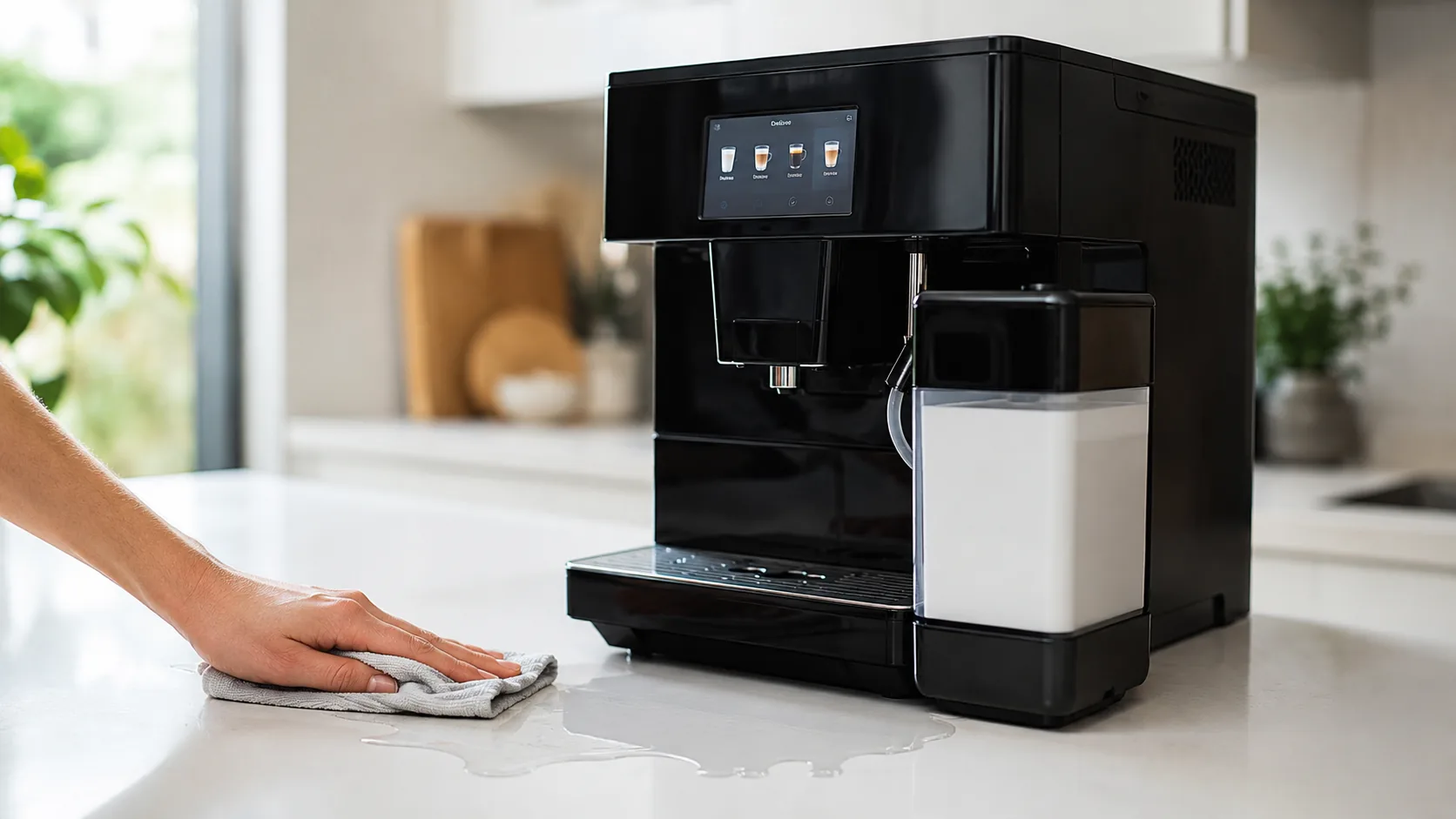
A puddle around a Philips 3200 looks alarming, but most “leaks” turn out to be an overflowing drip tray or a tank that’s slightly off — both routine fixes. And some water genuinely belongs there: the 3200 flushes itself into the drip tray every time you switch it on and off, so the tray fills faster than people expect. The trick, as with any leak, is to find exactly where the water appears first, because each location points to a different cause.
Let’s locate it, then go cause by cause — most likely first. Almost everything here is free or a cheap, owner-serviceable fix on this very maintainable machine.
First, locate the leak
Run the machine with a dry cloth handy and watch where water shows up:
- In or under the drip tray → tray overflow plus the normal auto-rinse (Cause 1).
- Back, near the tank → tank seating or a crack (Cause 3).
- Underneath during a brew → brew group seals (Cause 4).
- From the milk carafe → LatteGo assembly — see the milk guide.
- Slow weeps everywhere, old machine → scale (Cause 5).
Quick diagnosis
| What you see | Most likely cause | Jump to |
|---|---|---|
| Water in/under the drip tray | Tray overflow + normal rinse | Cause 1 |
| Water bypasses the tray | Tray / drawer not seated | Cause 2 |
| Weeps at the back | Tank seating or crack | Cause 3 |
| Pools underneath when brewing | Brew group seals | Cause 4 |
| Slow weeps, scale due | Limescale | Cause 5 |
Cause 1 — Overflowing drip tray (the usual “leak”)
Why it happens: The 3200 runs an automatic rinse into the drip tray on every power-on and power-off, so it fills quickly. Leave it and it overflows onto the counter, looking exactly like a leak.
How to confirm: The red float indicator pops up through the drip-tray cover when it’s full. Pull the tray — is it brimming?
The fix: Empty it, and make emptying it a routine part of your day. Watch for that red float and empty before it overflows.
Cause 2 — Drip tray or grounds drawer not seated
Why it happens: If the drip tray or the grounds drawer inside it isn’t pushed fully home, water and pucks miss the tray and end up under or in front of the machine.
How to confirm: Remove and refit both; check they sit flush.
The fix: Seat the grounds drawer and drip tray firmly and squarely. This also clears the related warning on the panel (see the error-lights guide).
Cause 3 — Water tank seating or a crack
Why it happens: The tank seals through a valve that must engage as you push it home. Overfilled, crooked, or with debris around the valve, it weeps at the back.
How to confirm: Remove the tank and hold it full over a sink — watch for seepage or hairline cracks. Check the valve and seating area.
The fix: Wipe the outlet and valve area, reseat the tank firmly and straight, and don’t fill past the max line. Replace the tank if it’s cracked — it’s inexpensive.
Cause 4 — Brew group seals (water underneath during a brew)
Why it happens: The removable brew group seals against the machine with O-rings. When they dry out, get dirty, or wear, water escapes internally during brewing and collects under the machine instead of reaching the cup.
How to confirm: Water appears underneath specifically while brewing, with the tray and tank ruled out.
The fix:
- Switch off, open the side door, and slide out the brew group.
- Rinse it under the tap (no detergent) and let it air-dry.
- Apply a thin film of food-grade grease to the rails and O-rings.
- Make sure it’s in its rest position and click it back in.
A monthly rinse and the occasional lube keeps the seals healthy and stops most internal leaks.
Cause 5 — Scale-related weeping
Why it happens: Heavy limescale stops valves and seals seating cleanly, causing slow weeps throughout the system.
The fix: Run the Calc Clean descale cycle with a proper descaler — see our descaling guide. Keeping the AquaClean filter fresh slows scale build-up and protects the seals between descales.
Common mistakes that make it worse
- Assuming any water in the tray is a leak — the auto-rinse puts some there by design.
- Emptying the tray but not seating it (or the grounds drawer) firmly, so water bypasses it.
- Overfilling the tank and calling the overflow a leak.
- Never cleaning or lubricating the brew group, so its seals dry out and weep.
- Skipping descaling, so scale makes seals weep and you chase phantom leaks.
Repair or replace?
Philips 3200 leaks are cheap, routine fixes almost without exception: empty and seat the tray, reseat the tank, clean and grease the brew group, or descale. The removable brew group makes the 3200 genuinely serviceable, and parts (tank, brew group, grease, filters) are inexpensive and easy to find. There’s essentially no leak that justifies replacing the machine. If it’s still under warranty, contact Philips before anything else.
Stop it happening again
- Empty the drip tray regularly — watch for the red float — and don’t overfill the tank.
- Rinse the brew group monthly and grease its seals occasionally.
- Seat the tray, grounds drawer and tank firmly every time.
- Descale on schedule and keep the AquaClean filter fresh.
- Address small weeps early, before scale and dry seals turn them into bigger ones.
Free: the Espresso Fix-It Cheat Sheet (PDF)
The 1-page printable that takes any fault to its cause, plus the maintenance schedule that prevents most breakdowns. Straight to your inbox.
By subscribing you agree to receive emails from BaristaFix and to our Privacy Policy. No spam — unsubscribe anytime.Frequently asked questions
Why is my Philips 3200 leaking water from the bottom?
Is water in the drip tray normal on a Philips 3200?
Why does my Philips 3200 leak water underneath when brewing?
How do I clean and lubricate the brew group on a Philips 3200?
Why is my Philips water tank leaking or not sealing?
Can limescale make my Philips 3200 leak?
My LatteGo carafe is dripping or leaking milk — why?
Marco spent twelve years servicing espresso machines — first behind the bench at a specialty café group, then running his own repair workshop. He has stripped down, fixed and reassembled everything from a battered Gaggia Classic to high-end Swiss automatics. He writes the fixes here only after reproducing the fault on a real machine, and he'll always tell you when a repair isn't worth the money.