
Philips 3200 Coffee Not Hot Enough? Heating Fixes That Actually Work
 By Marco R. · Lead repair technician Updated June 18, 2026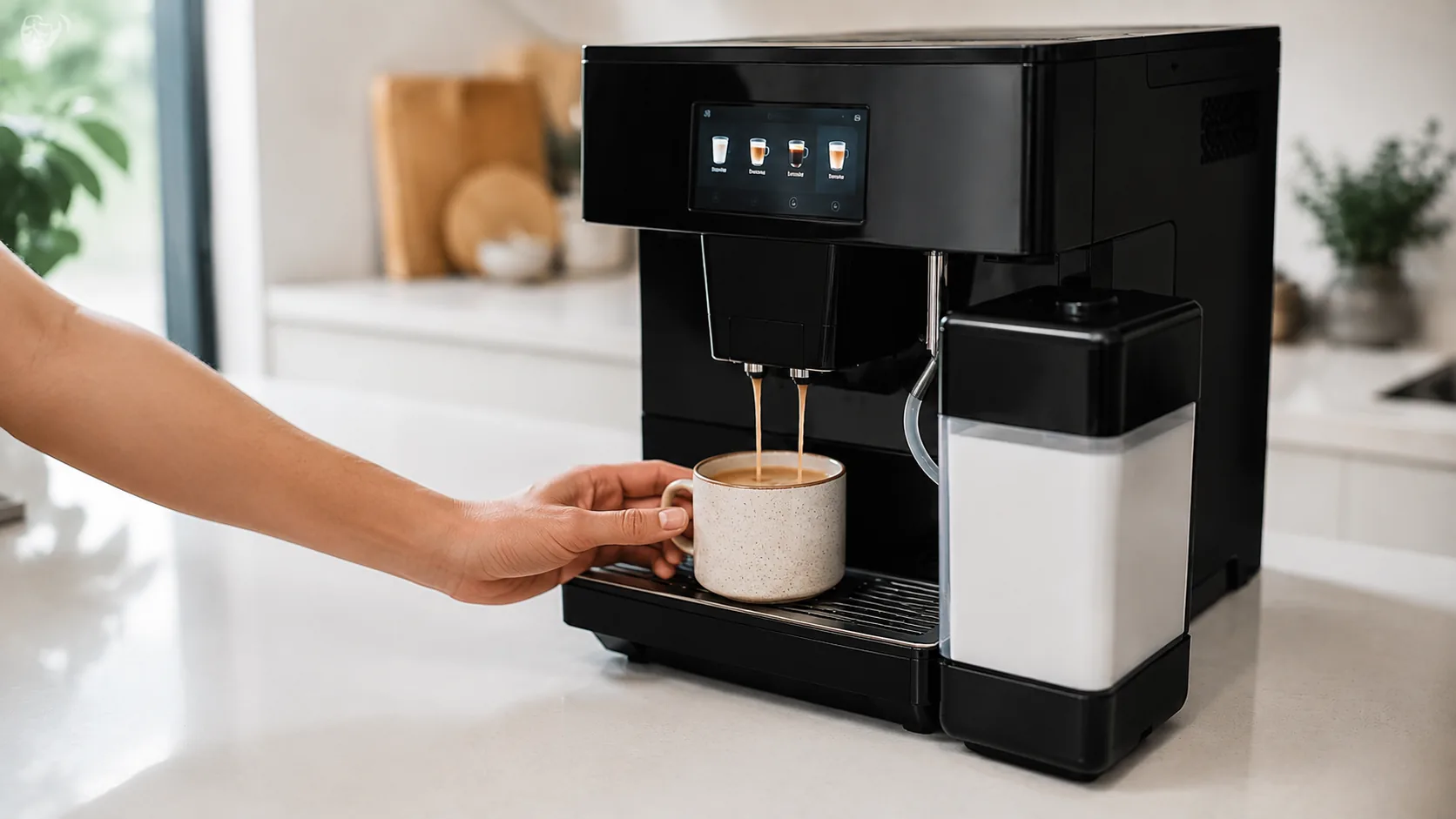
“My Philips coffee isn’t hot enough” is one of the most common complaints about every bean-to-cup machine — and one of the most misunderstood. The machine almost always heats the water properly; the problem is that a small coffee loses its heat fast into a cold cup and cool milk before it reaches you. So the fixes that actually work are mostly about keeping the heat you’ve already made, plus making sure scale isn’t quietly stealing it.
This guide splits in two. If your coffee is merely lukewarm, the fixes are quick and mostly free. If the machine genuinely never gets hot, that’s rarer — and we’ll cover that too.
First, which problem do you have?
- Coffee comes out warm but not hot → cold cup, small drink, maybe scale (Causes 1–3). This is almost everyone.
- Milk drinks are cool but espresso is fine → that’s the milk system (Cause 4).
- Genuinely never gets hot → scale or a fault (Causes 3, 5).
Quick diagnosis
| What you see | Most likely cause | Jump to |
|---|---|---|
| Warm, not hot, into a cold cup | Cup not preheated | Cause 1 |
| Could be hotter overall | Temperature setting | Cause 2 |
| Ran cooler over time | Scale | Cause 3 |
| Milk cool, espresso fine | Milk system | Cause 4 |
| Never gets hot at all | Fault — reset/service | Cause 5 |
Cause 1 — Cold cup and a small drink (the main reason)
What it looks like: The coffee is warm at best, especially espresso, and worse in a big cold mug.
Why it happens: A room-temperature cup drinks up a lot of heat from a small volume of coffee almost instantly — and milk drinks add cool milk on top.
The fix:
- Preheat the cup — run a hot-water rinse (or the hot-water function) into it, then tip it out.
- Brew straight into the warm cup.
- Use a smaller, warm cup for espresso, and serve promptly.
This one habit makes the biggest single difference to how hot your coffee actually is.
Cause 2 — Temperature setting (if your model has one)
What it looks like: Everything’s right but you’d still like it hotter.
Why it happens: Some 3200 variants let you raise the brew temperature in the menu; others don’t.
The fix: Check your machine’s menu — if there’s a temperature setting, raise it a level. If yours doesn’t have one, don’t worry: preheating and descaling move the needle more than the brew setting does.
Cause 3 — Scale insulating the heater
What it looks like: The machine has gradually run cooler and flows more weakly, often with the Calc Clean icon showing.
Why it happens: Limescale coats the heater and narrows the waterways, so less heat reaches the water.
The fix: Run the Calc Clean descale cycle with a proper descaler — see our descaling guide. In hard-water areas this is essential, recurring maintenance, and it commonly restores heat and flow together. Keep the AquaClean filter fresh to slow scale between descales.
Cause 4 — Milk not hot enough (it’s the LatteGo)
What it looks like: The espresso is hot, but milk drinks come out cool.
Why it happens: That’s the milk system, not brew heating. A machine that isn’t fully hot, a clogged carafe, or scale cutting steam power all leave milk cool.
The fix: Let the machine fully heat before frothing, descale if due, and make sure the LatteGo is clean and assembled correctly. See the LatteGo milk guide for the full walkthrough. Note the LatteGo aims for café-warm milk, not scalding — which is correct for the drink.
Cause 5 — Genuinely won’t heat (fault)
What it looks like: The coffee never gets warm at all, even after preheating and descaling.
Why it happens: That points to a heating fault rather than heat loss.
The fix:
- Switch the machine off for about 30 seconds and back on to reset it.
- Make sure the tank is full and seated, and run a Calc Clean descale.
- If it still won’t reach temperature, it needs Philips service — there’s little user-serviceable heating hardware, so this is a warranty or service-centre job rather than a DIY fix.
Common mistakes that make it worse
- Brewing into a cold cup and blaming the machine.
- Judging the first cup before the machine has finished its start-up heating.
- Ignoring Calc Clean, letting scale slowly cool the machine down.
- Confusing cool milk with a brew-heating fault — check the LatteGo and steam first.
- Letting the AquaClean filter lapse, so scale builds up faster.
Repair or replace?
For lukewarm coffee there’s nothing to repair — it’s preheating, serving and descaling, all free or routine, and they fix almost every case. A machine that genuinely won’t heat after a reset and descale is the only scenario pointing to service, and because the heating hardware isn’t owner-serviceable, that’s a warranty or service-centre call rather than a new machine. Try the free steps first; they resolve the overwhelming majority of “not hot enough” complaints.
Stop it happening again
- Always preheat the cup with a hot-water rinse before brewing.
- Raise the temperature setting if your model has one, and serve promptly.
- Run Calc Clean on time and keep the AquaClean filter fresh.
- Let the machine fully warm up before the first cup.
- For cool milk, keep the LatteGo clean and the machine descaled.
Free: the Espresso Fix-It Cheat Sheet (PDF)
The 1-page printable that takes any fault to its cause, plus the maintenance schedule that prevents most breakdowns. Straight to your inbox.
By subscribing you agree to receive emails from BaristaFix and to our Privacy Policy. No spam — unsubscribe anytime.Frequently asked questions
Why is my Philips 3200 coffee not hot enough?
How do I make my Philips 3200 coffee hotter?
Does the Philips 3200 have a temperature setting?
Why is my Philips 3200 not heating up at all?
Can limescale make my Philips coffee cold?
Why is my LatteGo milk not hot enough?
Should I preheat the cup on a Philips 3200?
Marco spent twelve years servicing espresso machines — first behind the bench at a specialty café group, then running his own repair workshop. He has stripped down, fixed and reassembled everything from a battered Gaggia Classic to high-end Swiss automatics. He writes the fixes here only after reproducing the fault on a real machine, and he'll always tell you when a repair isn't worth the money.