
Espresso Machine Upkeep: Steam Wand, Seals & Filters
 By Marco R. · Lead repair technician Updated June 18, 2026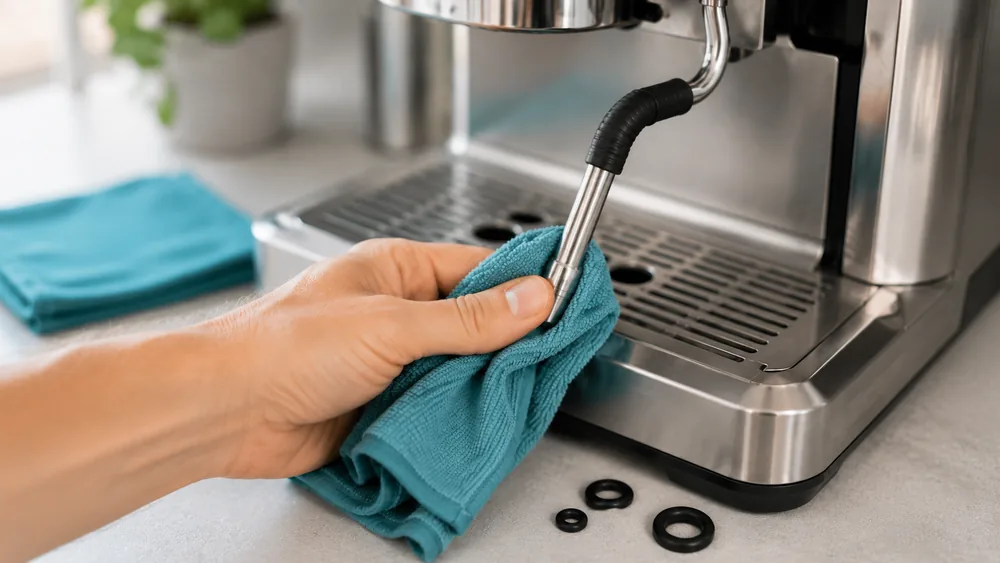
Descaling and cleaning are the big two maintenance jobs, but a handful of smaller habits are what quietly keep a machine out of the repair shop. None of them takes more than a couple of minutes, and together they prevent the leaks, weak froth and blockages that account for most of the problems on this site. Think of this as the “everything else” of espresso upkeep: the steam wand, the seals, and the filters.
The steam wand: purge and wipe, every time
A blocked or dribbling steam wand is almost always self-inflicted — milk left to dry inside the tip. The cure is a ten-second habit:
- Right after steaming, purge a short burst of steam to clear milk from inside the wand.
- Wipe the wand with a damp cloth before the milk dries on it.
- Weekly, soak the tip in hot water and clear each hole with a pin.
Do this and the wand essentially never blocks. Skip it and you’ll be fighting weak steam and poor froth within weeks.
Seals and gaskets
Rubber seals are wear items — they harden with heat and age and eventually stop sealing.
- Group gasket (portafilter machines): replace every 12–18 months, or when the portafilter locks much further past centre or water sprays from the edges during a shot. It’s a cheap part and a ~10-minute job, and a fresh one restores the seal and lost pressure.
- Brew-unit O-rings (bean-to-cup): on removable brew units, apply a little food-grade grease to the rails and O-rings periodically so the unit moves freely and seals — this prevents leaks and brew-group errors.
- Steam valve / wand O-rings: if steam or water weeps from the wand base or knob, these inexpensive seals are usually the cause.
Water filters
A cartridge filter does two jobs: it improves taste and it slows scale.
- Replace most filters every 2–3 months, sooner in hard water — or when your machine prompts you.
- Some systems (Jura CLEARYL, Philips AquaClean) let the machine skip descaling for a set number of cups while a recognised filter is active — follow the prompts and use genuine cartridges.
- Prepare new filters properly (soak/shake to remove air) or you’ll get an airlock and a “no water” scare.
A fresh filter means less descaling, cleaner-tasting coffee and a longer-lived machine.
The five-minute weekly checklist
| Habit | Frequency |
|---|---|
| Purge & wipe steam wand | After every milk drink |
| Empty drip tray & grounds | Daily / when prompted |
| Rinse group or brew unit | Daily |
| Soak baskets, check shower screen | Weekly |
| Check water filter | Monthly (replace ~quarterly) |
| Check / replace group gasket | Every 12–18 months |
| Grease brew-unit seals (bean-to-cup) | Every few months |
Common mistakes
- Never purging the wand, so it blocks with milk.
- Running a filter long past its life, losing scale protection.
- Ignoring a hardening gasket until it sprays.
- Using the wrong grease (household oil) on seals.
- Treating upkeep as optional — it’s what makes the difference between a machine that lasts three years and one that lasts fifteen.
The bigger picture
Upkeep is the third leg of the stool alongside descaling (scale) and cleaning (oils). Keep all three going and you’ll rarely meet the faults in our problems library at all. For the exact parts and steps for your machine, start at the machines page.
Free: the Espresso Fix-It Cheat Sheet (PDF)
The 1-page printable that takes any fault to its cause, plus the maintenance schedule that prevents most breakdowns. Straight to your inbox.
By subscribing you agree to receive emails from BaristaFix and to our Privacy Policy. No spam — unsubscribe anytime.Frequently asked questions
How often should I replace the water filter in my espresso machine?
How often should I replace the group gasket?
Why does my steam wand keep getting blocked?
Do I need to grease the seals on my espresso machine?
What weekly maintenance does an espresso machine actually need?
How do I make my espresso machine last longer?
Marco spent twelve years servicing espresso machines — first behind the bench at a specialty café group, then running his own repair workshop. He has stripped down, fixed and reassembled everything from a battered Gaggia Classic to high-end Swiss automatics. He writes the fixes here only after reproducing the fault on a real machine, and he'll always tell you when a repair isn't worth the money.