
Espresso Steam Wand Not Working? Milk Frothing Fixes (Any Machine)
 By Marco R. · Lead repair technician Updated June 18, 2026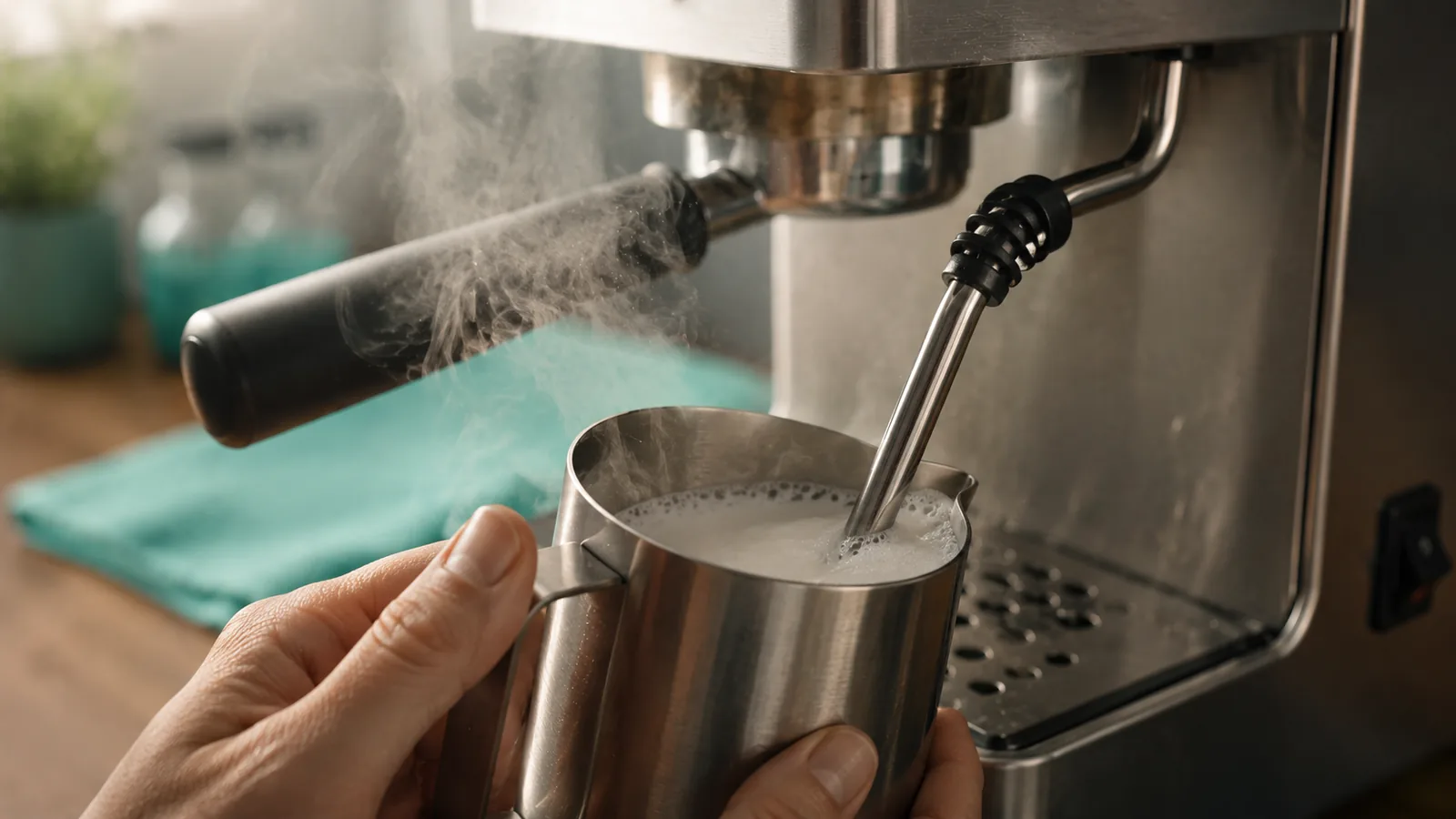
A steam wand that won’t make good milk is one of the most common frustrations in home espresso — and one of the most self-inflicted, because the usual cause is dried milk blocking the tip. Whether you have a traditional wand, a Pannarello, or an automatic frother (LatteGo, Jura fine-foam), the principles are the same. This guide covers the universal fixes; for your model’s specifics, jump below.
First, which problem is it?
- No steam, or very weak steam → not at temperature, blocked tip, or needs priming (a machine problem).
- Steam works but milk stays flat → not enough air, or a blocked air hole (technique/cleaning).
- Spits water at the start → normal condensate; just purge first.
The usual causes (any machine)
- Blocked tip — milk dried in the holes; clear with a pin, purge.
- Not at steam temperature — wait for the steam-ready light.
- Needs priming — air in the system; run hot water until steady.
- No air introduced — keep the tip just below the surface to aerate.
- Warm or wrong milk — use cold, fresh; barista editions for plant milk.
- Blocked air hole (auto frothers) — LatteGo/Jura/Pannarello clog here.
- Scale — narrows the steam path; descale.
Find your machine’s exact steps
Frother designs differ a lot, so the cleaning steps do too:
- Breville Bambino Plus — automatic milk frothing
- Gaggia Classic Pro — steam wand
- Breville Barista Express — steam wand
- De’Longhi Magnifica S — milk frother
- Philips 3200 LatteGo — milk system
- Jura E8 — fine-foam frother
- De’Longhi Dedica — Pannarello
- See all on the machines page.
By frother type
- Traditional wand (Gaggia, Barista Express): clear the tip holes, aerate at the surface, purge after.
- Pannarello (Dedica, Magnifica): slide off the sleeve to clean it and its air hole.
- Automatic carafe (Philips LatteGo): the foam comes from a tiny air slit where two parts join — keep it spotless and clicked together.
- Auto fine-foam (Jura): strip and rinse the frother parts; deep-clean with milk-system cleaner.
- Auto temperature-sensing (Bambino Plus): cold fresh milk, correct jug, and use manual mode for plant milk.
Common mistakes
- Never purging or wiping the wand, so milk bakes into the tip.
- Starting before the steam is ready, then assuming it’s broken.
- Keeping the tip buried the whole time, so you heat but never aerate.
- Warm or old milk, or standard plant milk that won’t foam.
- Skipping descaling, so steam fades from scale.
Fix it for good
Purge and wipe after every use, clean the tip or frother (and its air hole), steam with cold fresh milk, and descale on schedule. For the weekly habits that keep frothing strong, see upkeep — then follow your model’s steps above.
Free: the Espresso Fix-It Cheat Sheet (PDF)
The 1-page printable that takes any fault to its cause, plus the maintenance schedule that prevents most breakdowns. Straight to your inbox.
By subscribing you agree to receive emails from BaristaFix and to our Privacy Policy. No spam — unsubscribe anytime.Frequently asked questions
Why is my espresso machine not steaming milk?
How do I unblock a steam wand?
Why won't my milk froth even though I have steam?
Why does my steam wand splutter or spit water?
Can I froth plant milk on any espresso machine?
Marco spent twelve years servicing espresso machines — first behind the bench at a specialty café group, then running his own repair workshop. He has stripped down, fixed and reassembled everything from a battered Gaggia Classic to high-end Swiss automatics. He writes the fixes here only after reproducing the fault on a real machine, and he'll always tell you when a repair isn't worth the money.