
Espresso Machine Leaking Water? Find the Source (Any Machine)
 By Marco R. · Lead repair technician Updated June 18, 2026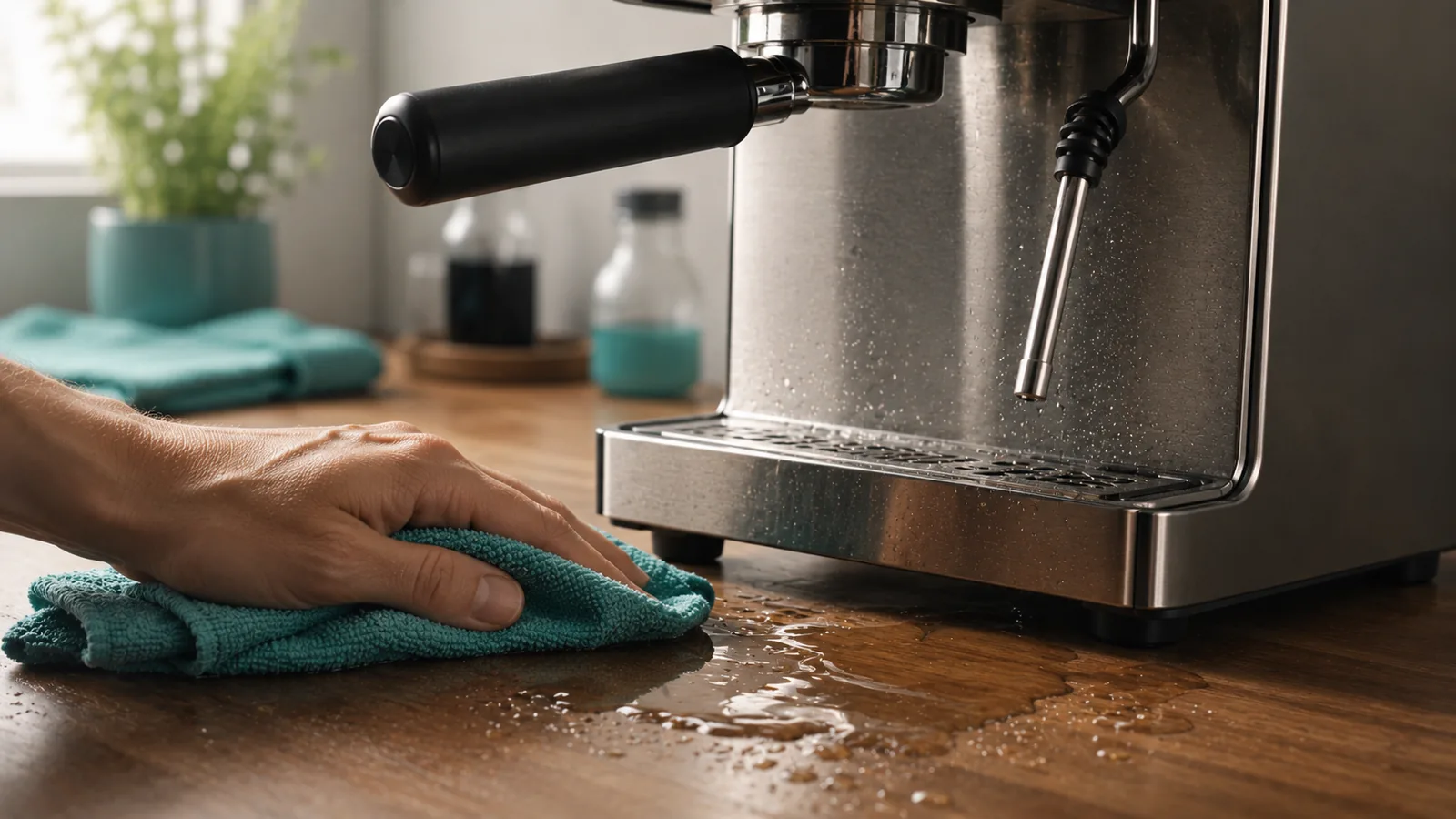
A puddle around the machine looks dramatic, but most “leaks” are cheap, quick fixes — and some water is meant to be there. The trick, on any machine, is to find where the water shows up first, because each location points to a different cause. This guide is the universal method; for your model’s exact fix, jump to it below.
First, locate the leak
Run the machine with a dry cloth handy and watch where water appears:
- In or under the drip tray → tray overflow (and normal post-shot drainage).
- Behind, near the tank → tank seating or a crack.
- Around the portafilter during a shot → worn or dirty group gasket.
- From the steam wand or knob → steam valve seals.
- Underneath during use, others ruled out → brew-unit O-ring (bean-to-cup) or an internal hose.
The usual causes (any machine)
- Overflowing drip tray — the most common “leak”; empty it.
- Tank not seated / cracked — weeps at the back.
- Worn group gasket — sprays around the portafilter.
- Brew-unit seals (bean-to-cup) — water underneath; clean and grease, or replace.
- Steam valve / wand seals — weeps from the wand area.
- Scale — makes valves and seals weep.
- Internal hose / connector — loosens with age; often a service job.
Find your machine’s exact steps
- Gaggia Classic Pro — leaking
- Breville Barista Express — leaking
- De’Longhi Magnifica S — leaking
- Philips 3200 LatteGo — leaking
- De’Longhi Dedica — leaking
- Nespresso Vertuo — leaking
- See all on the machines page.
By machine type
- Portafilter machines: drip tray, tank, and the group gasket are the usual suspects.
- Bean-to-cup automatics: the removable brew unit’s O-rings (clean and lightly grease them) and seating of the tray/grounds drawer; sealed machines need service for internal weeps.
- Pod machines: usually the tank, the head seal, or descaling.
Common mistakes
- Assuming any tray water is a leak — some drainage is normal.
- Emptying the tray but not seating it (or the tank) firmly.
- Overfilling the tank and calling the overflow a leak.
- Ignoring a hardening group gasket until it sprays.
- Never descaling, so seals weep from scale and you chase phantom leaks.
Fix it for good
Empty the drip tray regularly, seat the tank and tray firmly, replace the group gasket every 12–18 months, lightly grease brew-unit seals, and descale on schedule. Address small weeps early — then follow your model’s steps above.
Free: the Espresso Fix-It Cheat Sheet (PDF)
The 1-page printable that takes any fault to its cause, plus the maintenance schedule that prevents most breakdowns. Straight to your inbox.
By subscribing you agree to receive emails from BaristaFix and to our Privacy Policy. No spam — unsubscribe anytime.Frequently asked questions
Why is my espresso machine leaking water from the bottom?
Is some water in the drip tray normal?
Water sprays around the portafilter when I brew — what is it?
Can limescale cause leaks?
My machine leaks underneath during a shot — is it serious?
Marco spent twelve years servicing espresso machines — first behind the bench at a specialty café group, then running his own repair workshop. He has stripped down, fixed and reassembled everything from a battered Gaggia Classic to high-end Swiss automatics. He writes the fixes here only after reproducing the fault on a real machine, and he'll always tell you when a repair isn't worth the money.